Fashion, ‘Fair’, and our Frozen Culture

I finally settled down this morning to read the February edition of Vogue. I must have been about two pages in when I noticed something a little strange. ‘This is weird’, I muttered to myself, like some crazy old lady who keeps Vogues instead of cats, ‘very, very strange’.

Because, dear reader, I was convinced I’d picked up some kind of Frankensteined Vogue, composed of old editions. I was sure it wasn’t new. It was the Gucci ad first; models with blackened eyes, draped in cigarette pants and Midas touched-black – a classic look for the design house. I flicked the page. Louis Vuitton now, a spread of see-through bags clutched by pristine, fifties-esque models. But this was triggering a memory too – yes, the infamous Louis Vuitton ‘nurses’ in sheer coats, gliding sinisterly down the catwalks, back in 2008.
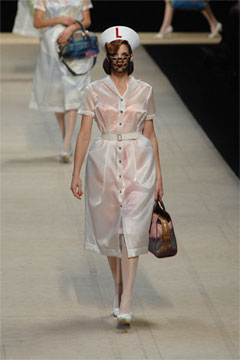
It was alarming, to say the least. I felt like Ebenezer, visited by the spirits of fashions past, present, and future. Except there wasn’t really a future, we were just looking back. Tremulously, I turned a few more pages. Dolce & Gabbana, straight back to the floral prints, black lace, and corseted bodices that have been such a trademark of the brand. I kept reading, feeling enjoyably like I was a teenager again, flicking through my first Vogue. This was fun! Sort of like a ‘Greatest Hits’.

Enough of the ads, I told myself. I want to see an editorial. I moved to ‘Spring Forward’, a round-up of prestigious pieces and key looks from an array of designers. Some names were new (Meadham Kirchhoff), and some not so – Dior. There on the page were some slim 7/8th pants, styled with a boat neck collarless jacket. Vogue had popped a crisp white shirt under it, and styled it on a model with a short fringe, instantly giving us a classic, clean late 50s Dior look. The Dolce floral prints continued, then a sequinned tweed Chanel dress. Ralph Lauren was represented by a cream tennis dress.
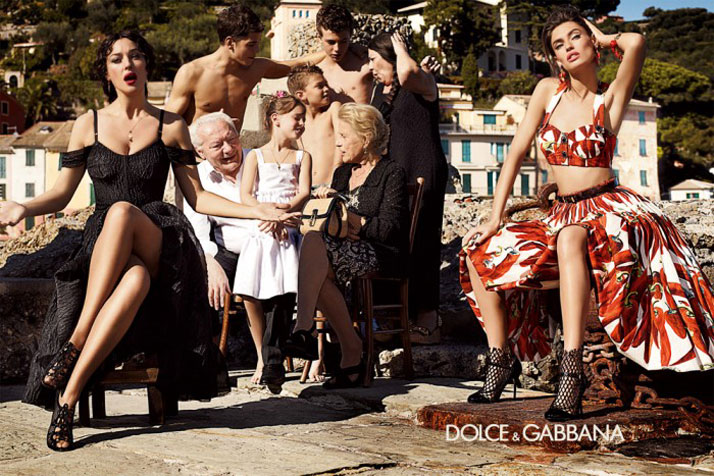
‘Christ’, I thought. ‘I’m going to turn the page and see some of that ghastly newspaper print ‘ – and I might well have done, had Mr Galliano not been, ahem, ‘otherwise engaged’. Miu Miu was modish, adorable and slightly clashing prints. Marc Jacobs had brought, to Vuitton, the mod collars and monochrome palette of his mid to late noughties years.

I started to wonder why. It was all very enjoyable, and made me feel safe. Reassured.  I recognised the brands. And perhaps that was exactly what I was supposed to feel. Allow me to explain – there is a general belief amongst certain writers and thinkers that we are stuck in a cultural ‘freeze’.

Kurt Anderson wrote an essay for Vanity Fair on how we are trapped, stuck since the 1990s in a loop of referencing ourselves, or retro. He argues that, despite the technological leaps and bounds we’ve witnessed, we’re still recreating things from times gone by – a series of playground ‘crazes’, but for grown-ups. We have our iPhones, which Anderson argues looks like a vision of the future from the past:

“People flock by the millions to Apple Stores (1 in 2001, 245 today) not just to buy high-quality devices but to bask and breathe and linger, pilgrims to a grand, hermetic, impeccable temple to style—an uncluttered, glassy, super-sleek style that feels “contemporary” in the sense that Apple stores are like back-on-earth sets for 2001: A Space Odyssey, the early 21st century as it was envisioned in the mid-20th.”

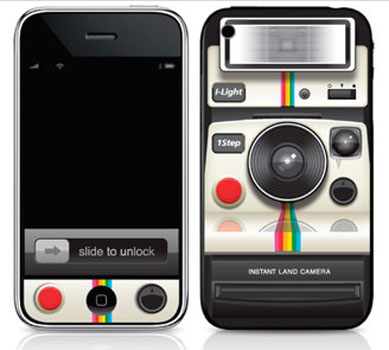
Think about it. We have all this technology at our disposal, and we download apps that recreate Polaroid cameras, or things like ‘Hipstagram’, which is like a retro on-screen fascia for your phone when you take pictures. At the same time, mass production is at an all time high, in both America and the UK. Look at the crumbling state of our high streets. We are all increasingly dressing the same, eating the same, buying the same objets. Almost everyone has a smartphone. Everything is getting cheaper, the mass market and the middle market have become the same, with only the luxury market standing aloof.
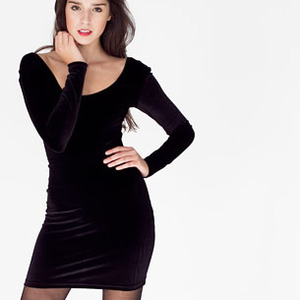
Of course, that means a certain homogenisation. We’ve had no ‘grunge’ movement, no sexual revolution, no startlingly new music. Nothing has shaped us as a generation. We are handed everything with the edges smoothed off (including our iPhones.) We have access to everything. There is nothing that has caused part of our generation to branch off and form sub-cultures. They do exist, but they are recreations of things past: look at all the East London hipsters, dressed in trilbies and holding retro cameras. Look at me, clad in my American Apparel body con jersey dress, my clothes from the 80s, my hairstyle straight out of the 60s.
So, perhaps that’s what has started to happen, here on the pages of Vogue. Fashion runs in a loop anyway.  ou know that, say, the star print micro trend from 2006 will make a reappearance (It did, at D&G, last Summer). But has it halted completely at 2011, just a series of re-runs like our TV stations? Old favourites?

I have another theory too, one that sits in line with the economy. The luxury brands are still managing to survive, and perhaps it is by implementing this ‘Greatest Hits’ strategy. When people spend inordinate amounts of money on a Dolce & Gabbana dress, perhaps they want to know that it is Dolce & Gabbana. To have the hallmarks stamped all over it.

It makes logical sense – we are all strapped for cash, why buy a groundbreaking bit of new design,  when we could get it in Topshop for £50? You get the designer, because it looks like the designer. So people can say ‘that’s Gucci, isn’t it?’ And of course, I know design houses will stick to a ‘feel’ throughout design cycles, but this feels different. New innovations have been dulled down. No Gaga-esque freakery has survived for 2012. The houses have been restored.

In a way, I’m enjoying it. Fashion has suddenly become bizarrely free from ‘trends’. At London Fashion Week last year, we saw the Spring/Summer 2012 collections, and most reviewers and writers commented on the ‘anything goes’ vibe of the shows. Pastels? Always a Spring staple, go for it. Navy? If you want. Huge tassels? Definitely. Wear whatever you like.

Isn’t that refreshing? I’m not proposing we all slavishly follow the trends anyway, I know some of you will be lost by this point. I just find it exciting that designers are looking back to the past ten years, and creating a definitive look based on previous hits. Whether it’s because we really are stuck on a cultural loop, or to salvage what business they can in a fracturing economic climate, it’s a phenomenon in itself. I wonder where we’ll go from here? In the meantime, I’ll just keep wearing my 80s clothes, listening to my 80s music, and taking Polaroids on my iPhone.

(Muchos gracias to Google images for the beautiful pics.)

Privacy Policy

(Aka: ‘This just in! Amelia writes a grumpy blog post!’)

A rather interesting turn of events has unfolded this morning. It’s all been a bit Ian McEwan, revolving around just one small ‘set piece’, and the different reactions to that happening.

The set piece: I received a message this morning informing me I’d had a tweet published in the local paper. Was I excited to see my name in print? Eagerly rushing out to buy copies for all the fam? Not so. Possibly because I was a bit groggy from just waking up, and the vodka tonics I’d consumed at Sankey’s last night, but I was a little….shall we say, dumbfounded?

I racked my brain. “But…I haven’t tweeted the local paper about any issues this week, have I? Unless I was really blacked out on those V&Ts last night, and came home and vented about that weird cat that keeps following me around when I go running. No. No, I didn’t do that.” I literally couldn’t comprehend as to how something had got from my brain, onto the net, and into the paper.

Look, I know we’re not dealing with News of the World levels of scandal here – and perhaps I should attribute some of my ire to watching ‘Hacks’ the other week (by the way, that wasn’t very good, was it?) But I was a bit disgruntled, to say the least. I put the pieces together. So…they can just take a tweet, a random piece of ephemera coughed out by my overwrought brain at an ungodly time of the day, and publish it? Cripes.

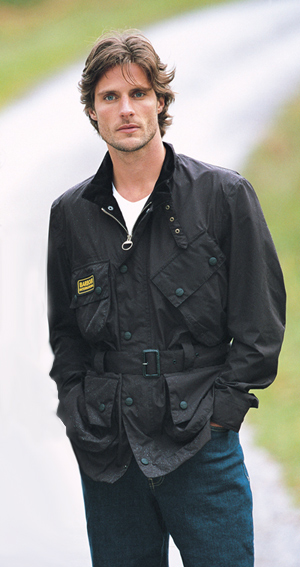
I mentally rewound the week in tweets. I tweet a LOT. A lot a lot. My mind settled on some particularly un-printworthy remarks I might have made about the Fabulous Baker Brothers, or boys in Barbours. Oh, lord, no. Please not that. I don’t want to look like some lascivious old man.

See, the thing is, I just tweet whatever comes into my head. A stream of non-sequiturs, comments on any passing whimsy, conversations with strange and wonderful new people, and a LOT of perving over the aforementioned Baker Brothers. I wear my heart on my feed, as they say, and I’d like to think that my followers appreciate that. The knowledge that any one of my, quite frankly, bizarro tweets could end up on paper made me tense up.

Perhaps you think I’m being a bit of a prima donna? But I’m saying the opposite – I am not Diane Abbott, or Stephen Fry, or even lurching out of the bars and art galleries of Chelsea (I do that, but not while being filmed. I think.) I am a person of no importance. But in a way, Twitter makes you important. It gives you a platform, it builds your ego – I mean, why call them ‘followers’ instead of ‘friends’? Sheer ego boost. With Twitter, the barriers are breaking down. You can talk to a celebrity. You can slag off poor old Anthony Worrall-Thompson. You can make a comment that gets ratcheted around the world within seconds.

I thought I’d learnt my lesson after a bit of a ‘run in’ with comedian Richard Herring. I’ve loved Herring for years, gone out of my way to see him and to listen to his Edinburgh Festival  coverage. I made one sarky comment, which someone tweeted back to him, and suddenly poor old Mr Herring was talking directly to me. I felt horrible. My offhand remark had gone straight to the source, and not even of some celebrity I despised, but to someone I actually liked! On that day, I promised myself I’d be a bit more Twitter-savvy. I apologised, and explained myself, but ultimately that feeling still stuck with me. Even though their Twitter account may have a blue ‘verified’ badge by it, they’re people too.

Mmm, boys in Barbours

My tweets, as I touched on before, are pure drivel most of the time. Enjoyable waffle, I hope, but piffle all the same. I rarely comment on things that are actually important. I just wang on about Wayne’s World and my new felt-tips, and what lovely apple juice I just got from Waitrose. So what’s the issue?

I have two. Firstly, the use of a tweet which might have been a joke, or just generally not in context. My particular tweet was regarding the lateness of the post. A throwaway comment by a girl who was looking forward to getting her new yummy business cards. Put it down in print, and suddenly it looks like I’m making a comment on the Royal Mail in general. It worries me that things can be taken to prove a point that I wasn’t making in the first place. If I’d been asked to comment on the postal service, I’d have given a fully rounded remark. But it isn’t about the single tweet, it’s the principle.

Oh, and I know, this is hardly new. Journalists using things a certain way to make a story? Points being lost in editing? GROUND-BREAKING. Not. But my feeling was one of ‘I didn’t sign up for this’. Many of you have disagreed, saying that simply by tweeting in the first place, I am putting my comments into a public forum, and they can be used willy nilly (I just wanted to shoehorn that phrase in.) Another line of argument has been, ‘you keep a blog, you tweet voraciously, you Facebook like tomorrow is the end of the Mayan world’. Sure. I do all of those. But if you actually read the things I write, I tell you very little about my actual life, even if it seems like I’m sharing my deepest, darkest secrets with you.

My second issue is with the reproduction of something I have said without my permission. ‘Permission-schmission’, you said. Well, ish. I think you worded it a little more cleverly than that. But really, how much time would it have taken to extend the courtesy to a mere four or five twitterers whose tweets were going to be published, just to say ‘is it ok?’ It would take seconds. And yes, you’ve all come back and said ‘there is nothing legal in place to say they have to do that’. Fine. But what about asking in the spirit of fostering community? It’s a local paper, not The Sun. If I’d been informed, I might have even got quite excited about it.

I’d like to put it in another context. When you take a photo of somebody and publish it, either on your blog or in print, you HAVE to ask permission. Last year at London Fashion Week, even in the busiest environment ever with a million style mavens milling around, photographers would tap you on the arm and say ‘excuse me, could I photograph you for my street style piece?’ Whether it’s a legal requirement or not, it’s still courtesy. So if we extend that courtesy to people when taking their photo, what about when using their thoughts? Surely it’s even MORE important to ask?

It all hurts my poor little heart a bit, because I adore Twitter. It makes me deliriously happy. But this stuff? Not so much. I want to be free to say whatever comes into my head. I think I may have to hire a spin doctor.

I have no wish to cause a controversy or start a fight. For one thing, I hate conflict, and I’m a generally happy bunny who doesn’t want to upset anyone. I wanted to work out why I was left so wrong-footed by this development, and I suppose this is just me questioning a system that is changing, and the hulking megabeast of the social networks, and whether I’m happy to stay within their confines. This is not a war cry, more a last word.

Perhaps I’m making a big issue about nothing. Perhaps I simply wish I’d had something more pithy printed than a comment on the post, which didn’t exactly make me look like Dorothy Parker. But for those of you who just didn’t get why I was frustrated, I hope this might help you understand a little more. This isn’t a searing indictment of regional journalism. Hey – I’m a writer too. I get where you’re coming from. But surely, there must be a better way?

Peace out.

Amelia x

P.S. This article is meant (mostly) light-heartedly. I have no wish to cause a frenzy. I am merely making a comment on an issue, and trying to explain why I was a little bit bothered by it.

Moo.com Mini Cards

Moo!

In the spirit of bigging up things that I think are really rather ace, I thought I’d do a little bit of a post on Moo.com, the home of beautiful business cards.

A few months ago, I decided to turn to Twitter for a bit of advice on business cards and where to buy them. I always like to get opinions from people, because there are SO MANY PLACES that offer business cards, at a million different price points. Being an aesthetically-driven girl, I knew that I was willing to pay a bit more to get some really decent cards. The kind of things I do – writing, designing, creating – need to be represented by a good, creative card.

I garnered opinions, and most people mentioned Moo. A few said Vista Print, mentioning it was cheaper, but I’m a bit of a snob and I’ve handled these cards before and am really not keen on them. They’re fine if you’re a certain type of business, but if you’re in the creative industries or really want to make an impression with your cards, use Moo. The options are endless with Moo – you have double sided cards, either business or mini cards, and with the business cards you can have either square edges or rounded. You can also opt for ‘green’ paper, which is more environmentally sound but still good quality. They have a range of other products, but I’m just going to talk about the ones I’ve tested myself.

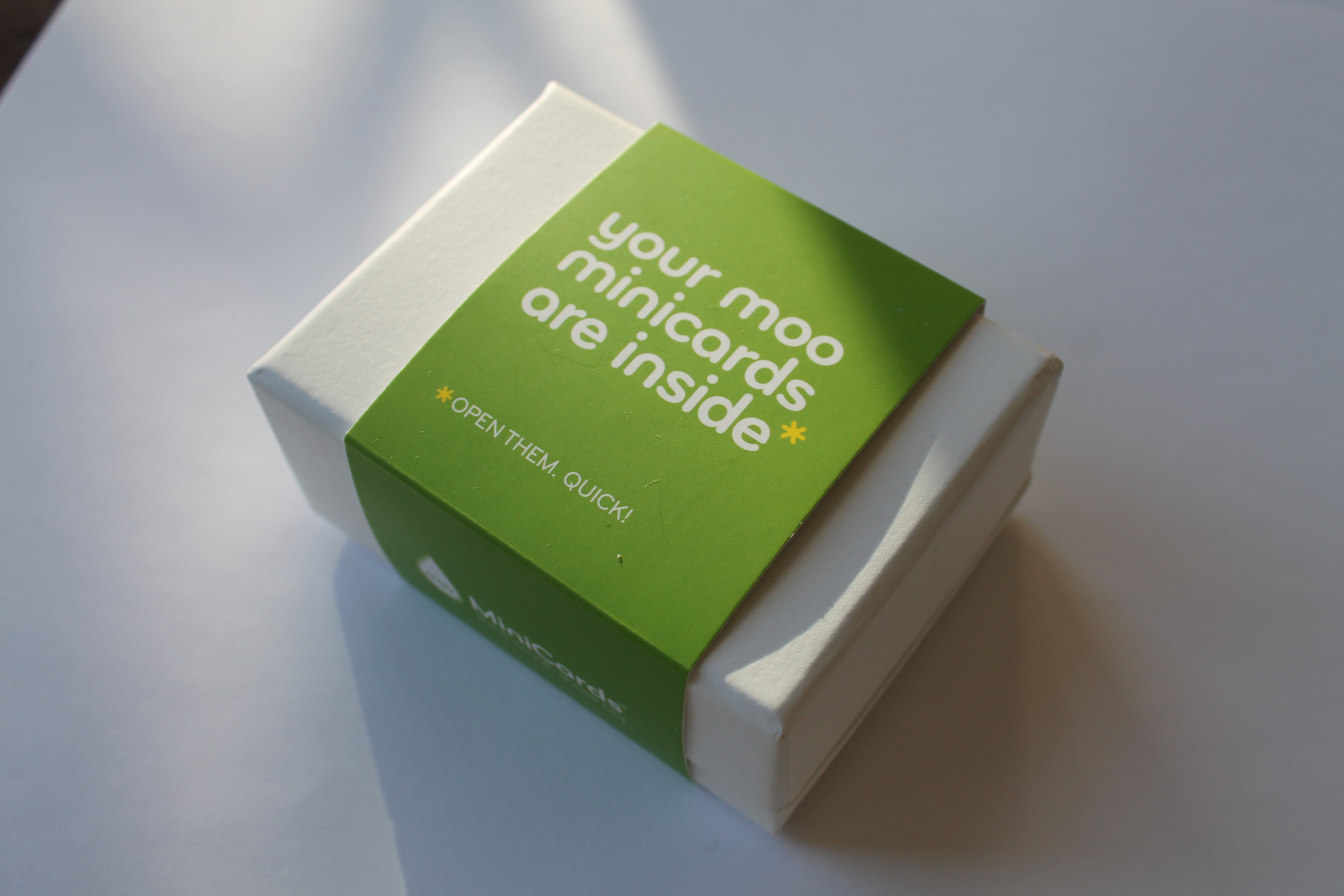
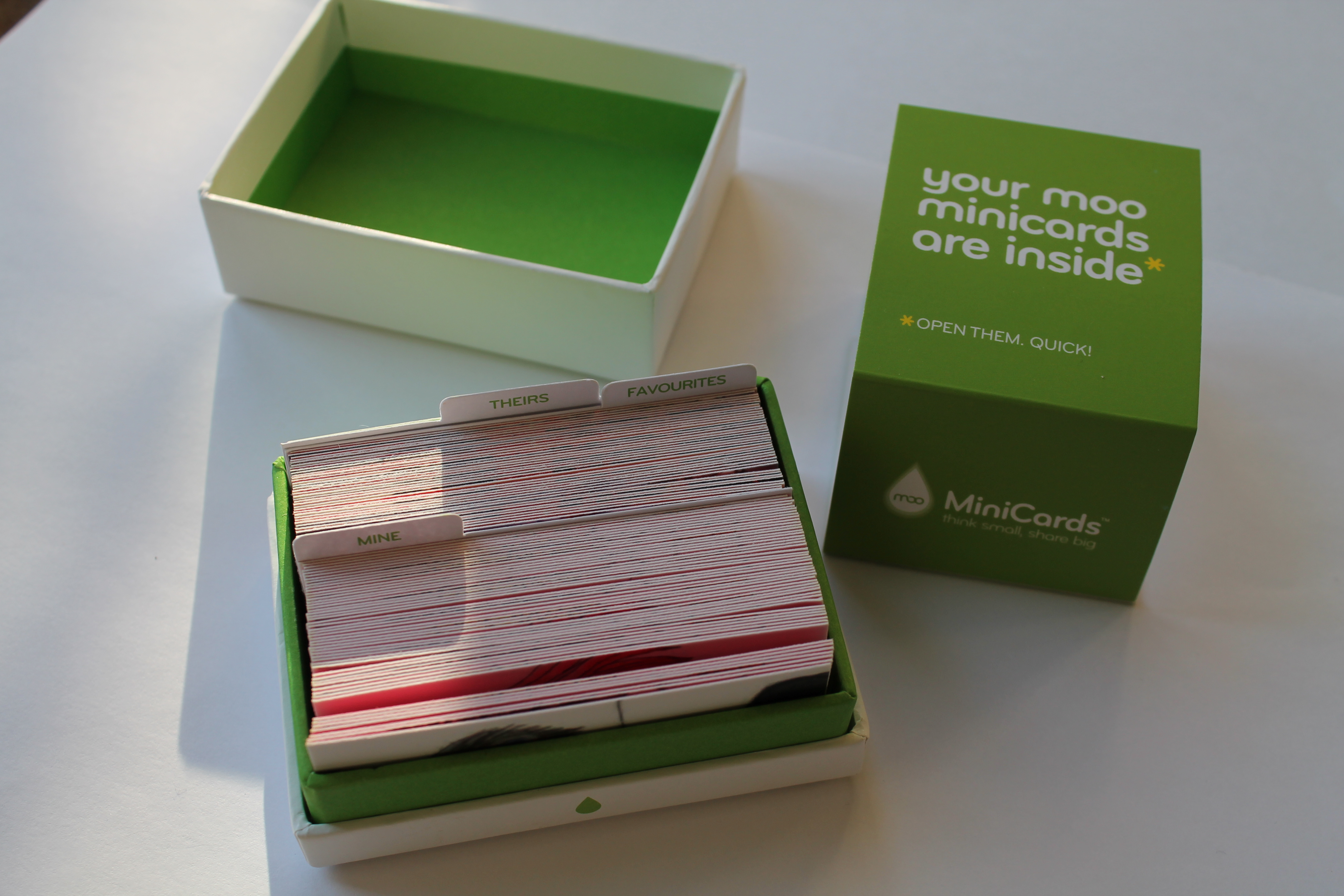
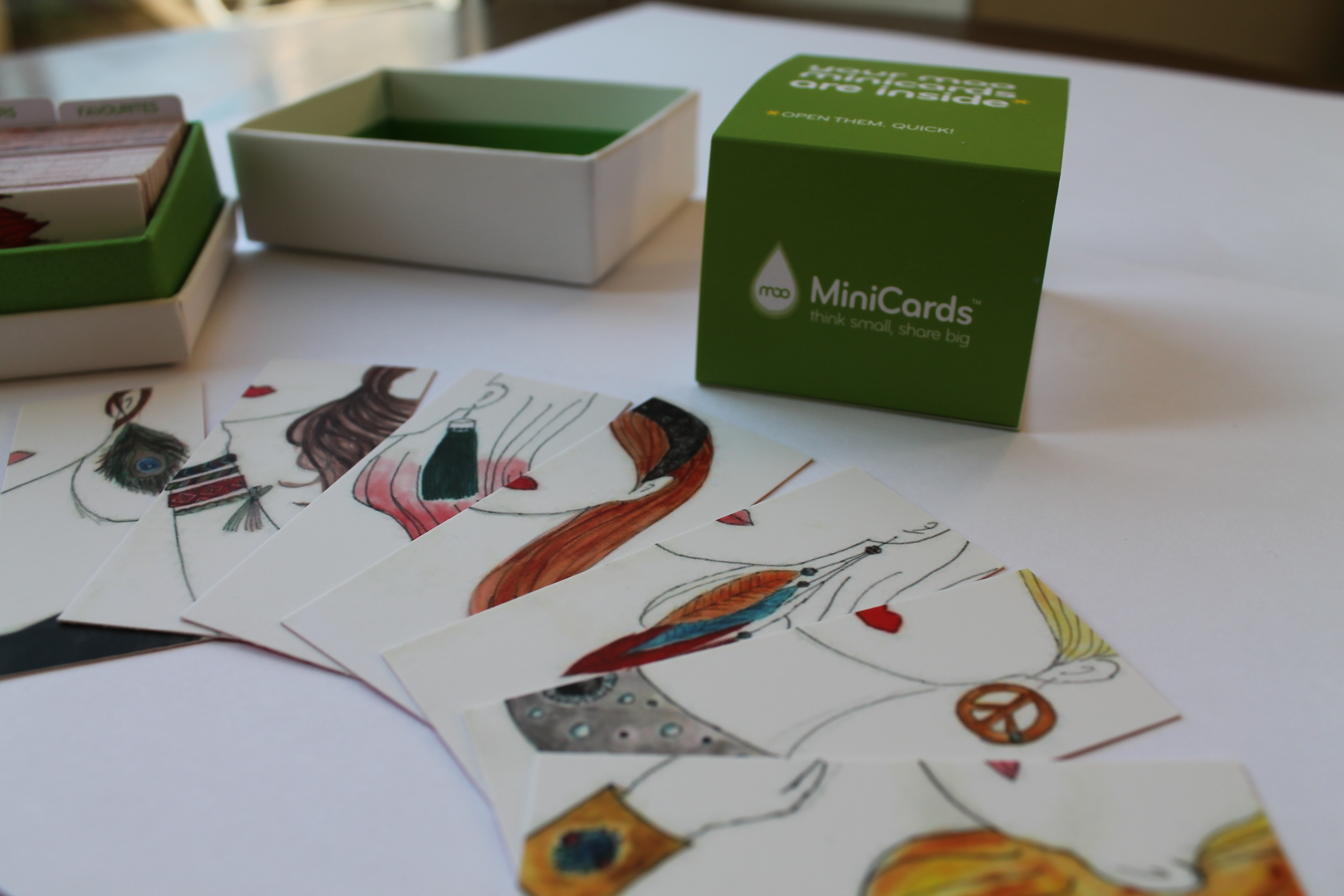
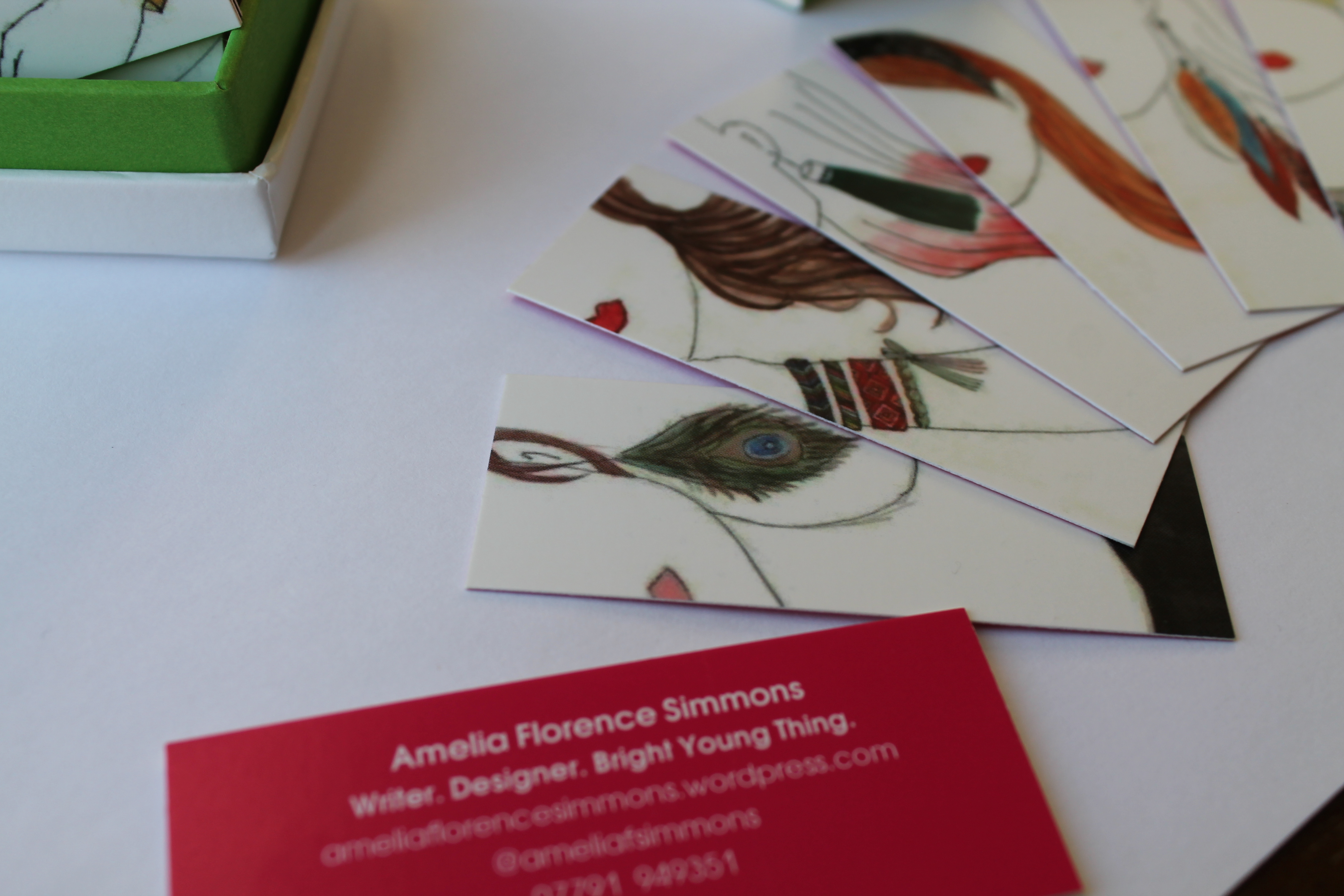
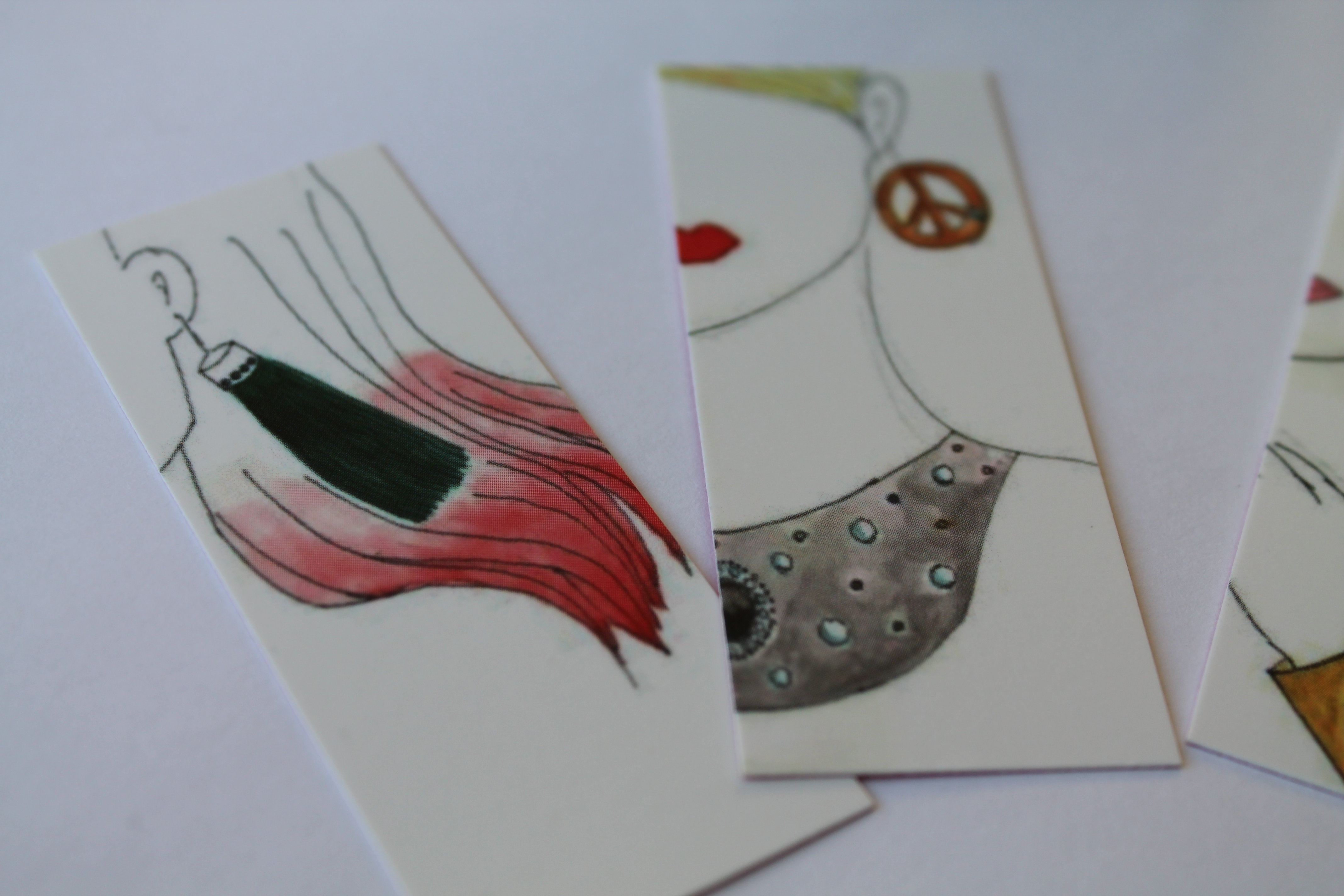
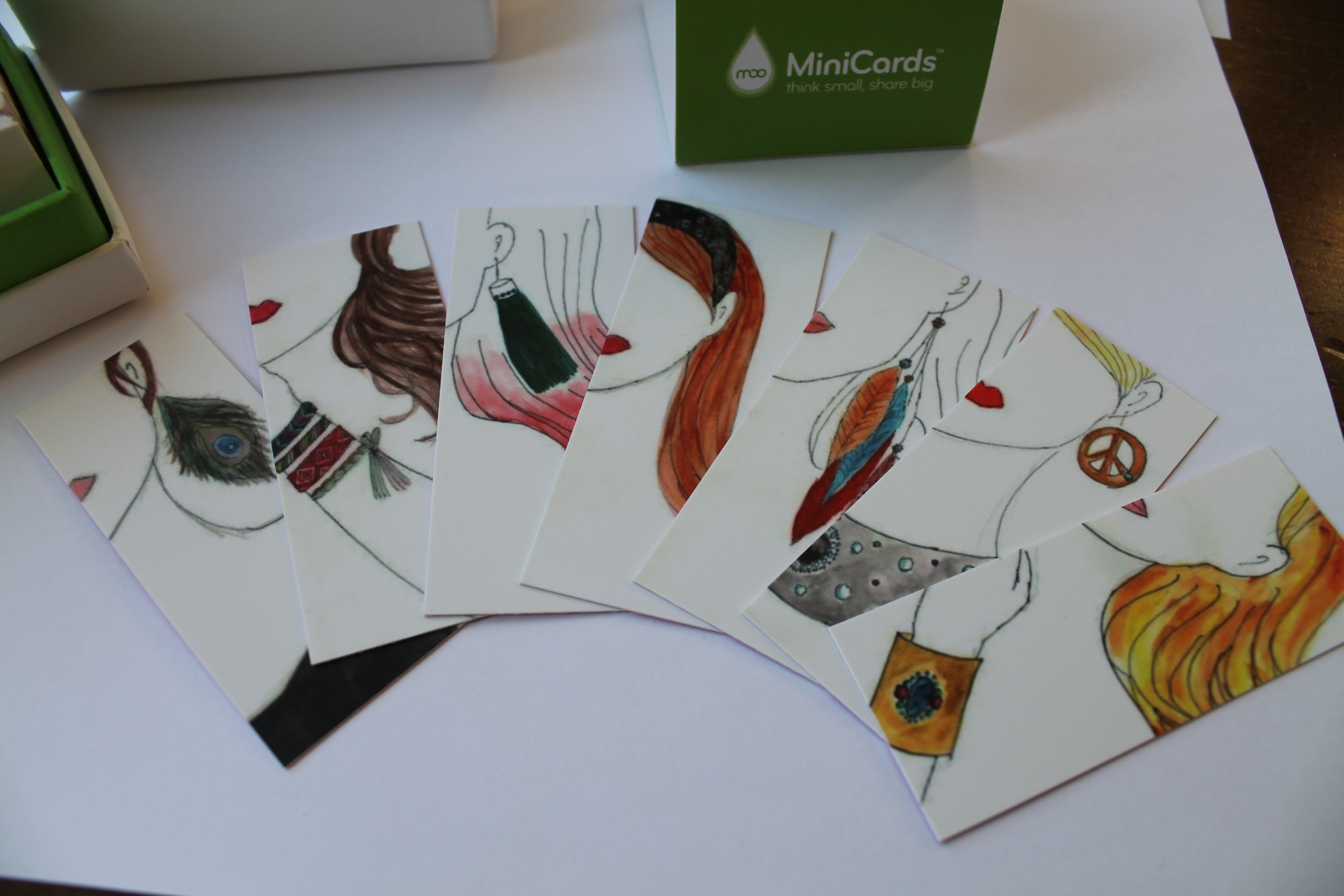
Anyway, I sort of knew what I wanted, and that I was going to try out the mini cards, but then I heard on the grapevine that if you signed up for Klout.com, you could get a free pack of 100 mini cards. I’d never used Klout before, but it basically measures your influence across social media. I signed up and it spouted out a score of 44, which was apparently enough for me to get my cards. I breezed through to the site, uploaded my designs (you can choose up to 100, ideal for photographers and designers), cropped and zoomed them till they were the right size, then completed the backs. It’s all very easy and user-friendly.

I decided to just do the whole thing as a test run, seeing as I was getting the cards for free, so I picked a selection of my own illustrations as well as some photos of my jewellery, just to test whether they’d print up well. I’m generally very happy with the quality of the prints, although the photos are a little darker than I’d like, but I think that’s an issue from my end.

Price-wise, I got 100 mini cards for £3.90 (just paying for shipping). I then had an email from ‘Little Moo’, saying my cards had only been laminated on one side, so they’d send me the first lot, but then another 100 free of charge. I’d opted for the standard delivery, and my first lot turned up within about three days, well before the date they’d stated. I also purchased 100 business cards, including shipping, at about £16. All in all, I am a happy bunny.

Moo.com is a fun, quirky site that will appeal to you if you appreciate the creative side of life, and want a really good quality business card that can be a talking point. I’ve come over all Patrick Bateman about mine (no murdering yet, though.)

If I had to criticise anything, I would say that a couple of times I’ve had a message ping up on the screen saying ‘Sorry, something went wrong! Please contact our customer service team!’ It’s usually when I’ve been just about to place my order, or finalise it. It’s a little frustrating and quite worrying, but hasn’t actually caused any problems – I never lost the cards I was working on or anything. And then the printing error – even though I think all my cards are totally usable, and I’m very excited about getting another 100, what if they weren’t ok? And you’d ordered your cards specially for an urgent function? But those are my only two issues, and obviously the printing error is a blip and not something that happens everytime, and they have handled it extremely well.

Anyway, because you are my readers, and you are bathed in yummy honey-coloured sunlight, I have a discount code for you! Simply click this link, and you can get 10% off your order with Moo.com: http://www.moo.com/share/q78mz6

Go on, treat yourself. Specially with the Mini Cards, because I feel a bit like Business Barbie holding them!

Executive love,

Amelia xx

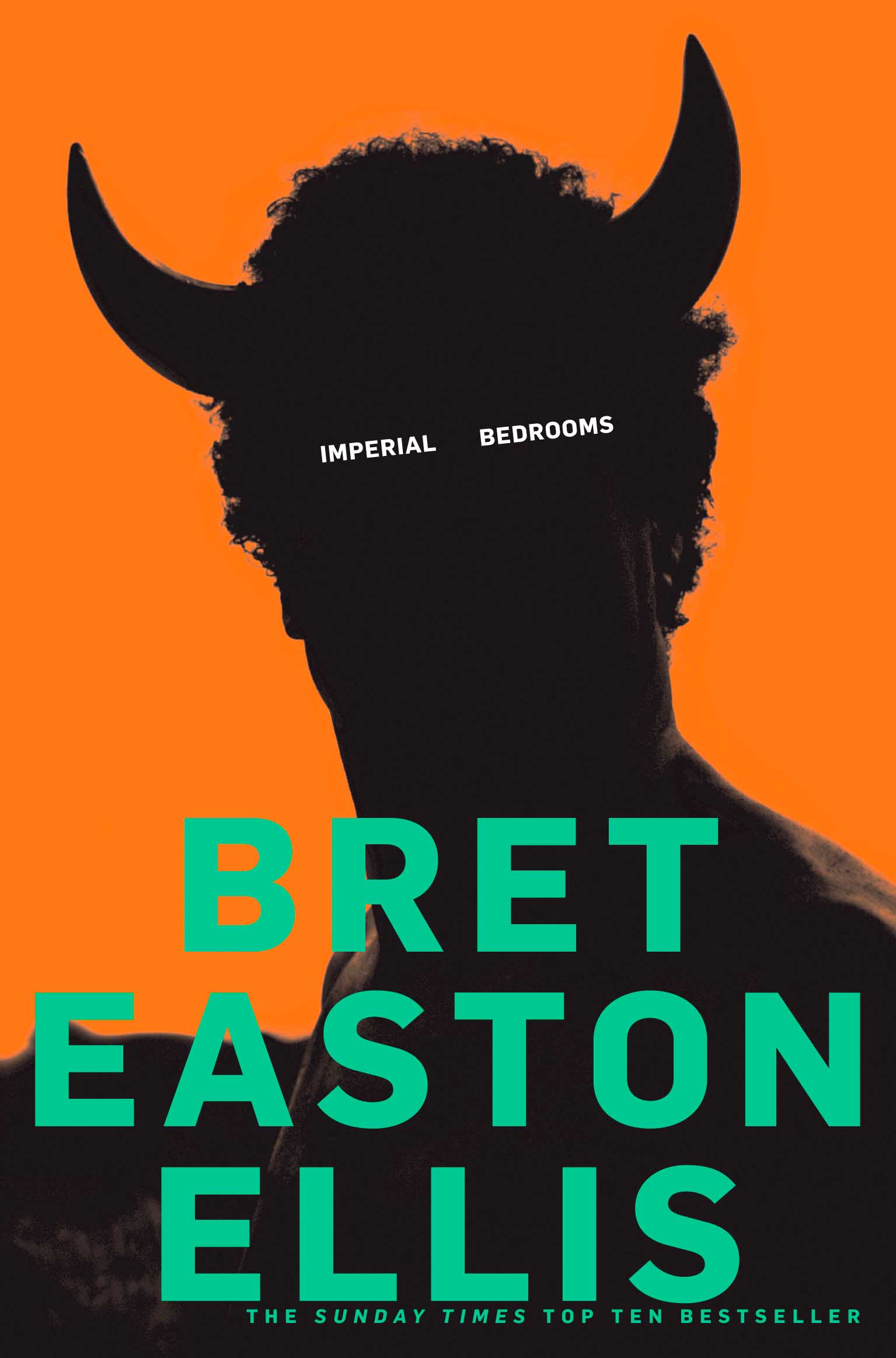
Book Review #2: Imperial Bedrooms

“They had made a movie about us.”

I can’t quite remember at what age I first became aware of Bret Easton Ellis. What I can remember is reading American Psycho on a train late at night, then standing in a near-empty station and squinting suspiciously at every around me. I was completely on edge, paranoid, jittery, and somewhat terrified. Something about that book, and Bateman’s character, manages to leach into your soul. Reading it in public made me feel like it was me having those psychotic thoughts, that I myself was dangerous, and dark. It was a peculiar feeling. And even though there are passages of American Psycho that I can barely make it through, it’s one of my favourite books.

I’d always meant to read more of Ellis, but put it out of my mind until I started seeing the most remarkably well read boyfriend I’ve probably ever had. He’d read (and enjoyed) infinitely more books than I had, despite my English degree, and he lent me a copy of Glamorama. I have to say, I found it harder to plough through, but his sheer enthusiasm for Ellis and the surreal, spinning worlds he creates made me keep trying. Glamorama was long and winding (like some sort of road that the Beatles would have sung about), and I eventually admitted defeat.

I’d just been reading that they’re doing a remake of American Psycho, and I suppose that lodged in my brain when I took myself down to the bookshop, where I swiftly nabbed the neon bright Imperial Bedrooms, Ellis’s comeback novel. I had purposefully not read any reviews, and therefore I managed to overlook the fact that this is a sequel to Less Than Zero. I muddled on all the same. It was typical Ellis – no chapters, just ‘passages’. Marathon sentences that made the reader feel slightly manic, due to the sheer volume of words. His writing is a fascinating study on the effect structure alone has on the reader. Simply by writing these endless sentences, one becomes drawn in to the narrator’s fragile state of mind, just as paranoid and sweating as the protagonist themselves.

Less Than Zero

The novel starts with the line ‘They had made a movie about us.’ And in one fell swoop, Ellis manages to dislodge the sticky remnants of the Hollywood film of Less Than Zero, an adaptation which notoriously strayed from the original novel and plonked some heavy duty moral lessons onto Ellis’s emotional wasteland. Thusly, Ellis can explain away the death of Julian neatly in a masterstroke of meta-narrative.

I knew what to expect from reading his previous works, and the style in Bedrooms was not, largely, different. Unflinching, unemotional descriptions of the most brutal violence punctuated with song titles, liquor brands, ‘hot’ restaurants. Obviously the constant references to ‘culture’ and ‘things’ are one of the keystones to Ellis’s work, and help not only to contextualize the work, but to construct the lens through which his characters view the world.

This was done to much better effect in American Psycho, where the infamous lengthy description of Patrick Bateman’s business cards sat alongside passages about the murder of prostitutes. American Psycho worked for me, and many others, due to the sheer volume of description relating to speakers, or exercise regimes, or Bateman’s grooming habits. As the book rattled to a close, these descriptions became increasingly interspersed with the violent passages. This set Bateman as an extraordinarily unhinged character, but also provided comedy. It was ludicrous and obscene how Bateman would involve us in an episode involving some prostitutes, a chainsaw and a rat, before discussing a new restaurant. (That’s a generalisation, forgive me if I’ve remembered incorrectly.)

But back to Bedrooms. The novel is alarmingly slim, which means you ratchet straight into protagonist Clay’s return to LA, and his rapid descent into hell. Ellis draws LA as the Gomorrah of the modern world, full of people disfigured by surgery, drug addicts, prostitutes, and those lacking even the word ‘moral’ from their vocabularies. LA is almost the main character, and while the novel implies Clay had been leading a relatively sane life in New York, his return to the place captures him like a cancer. It isn’t long before he’s embroiled with a young beautiful actress – although this being LA, she’s already over the hill at 22/23, her beauty is a currency that isn’t enough, and ‘actress’ is a byword for prostitute. How refreshingly 17th Century.

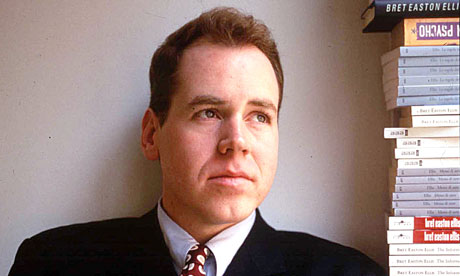
Bret Easton Ellis

Rain, as the “young” “beautiful” “actress” has named herself, is an utterly appalling character with no redeeming features whatsoever. I sometimes wonder if Ellis writes his female characters as either saints or whores, in the old tradition. Rain is most definitely the latter, and you can make your mind up about Blair when you read the little coda on the final page. Much of the novel centres on Clay’s “relationship” with Rain, full of power plays, hate, and Patron Tequila. The voracity and desperation with which Rain pursues the part in a movie Clay has written is somewhat nauseating, purely because it’s most likely rather true to life of a certain breed of young women.

Hollywood is a cruel, vile place in Ellis’s eyes. If you’re too old (i.e. 22!), too ugly and unable to afford the plastic surgery you require, you’re sunk. I managed to comfort myself slightly by thinking he was exaggerating the soulless, skewed aspects of the place, but then I happened to thumb through Glamour magazine to an exposé on how many young actresses in Hollywood are leading double lives, as prostitutes. As per usual in a Bret Easton Ellis novel, I finished with a sour distaste for both modern life and people in general. The most marginal bit of comic relief comes in the form of Rain’s instantaneous turnarounds of emotion as Clay dangles the movie role in front of her. Rain is an empty vessel, we never know what she thinks. But we never know what anyone feels, because of Ellis’s adherence to the minimalist style he is famous for.

Characterwise, he tends to go on describe faces not personalities, leaving the reader unsure of how to gauge certain characters. He has come under immense scrutiny from feminist critics for both the portrayal of women in his body of work, but also for the way they are treated. I personally disagree – Ellis has argued that his writing in fact incriminates men, that his novels are all about the terrible actions of men, which I would agree this. He creates characters in a long line of villains you ultimately want to ‘get away with it. I’d read Lolita at a very early age, and had fallen irrevocably in love with Humbert Humbert. As most readers do, I wanted him to get away with it. I wanted him to achieve his ghoulish desires, and there was no question that I was utterly on his side. See also Iago in Othello.

The novel is plot-driven, unlike some of his other works. I didn’t find it as fresh as his other novels – a strange term to use when describing such a jaded style of writing, but it just lacked the power that, say, American Pyscho had. Perhaps I simply knew what to expect? Those long paranoid descriptions of the protagonist being followed, feeling that everyone was looking at him…ultimately, it didn’t bring anything new to his cannon of work. That said, I think any diehard Bret Easton Ellis fan has been longing to see him tackle the modern celebrity culture, and to explore the endless bounds forward in technology. And true enough, in Bedrooms, iPhones, YouTube, the creeping feeling of social media and technology taking over our lives – these things are all present, and ultimately used to control certain elements within the story.

If you’ve read Less Than Zero, then you could read this as a ‘where they are now’ exercise. Clue: there are no happy endings in Bret Easton Ellis. Or you could read it as a comment on the throbbing, nauseating, ever-churning Hollywood star machine. If you like your chick lit or easy reading, you’ll probably want to drive a million miles in the opposite direction.

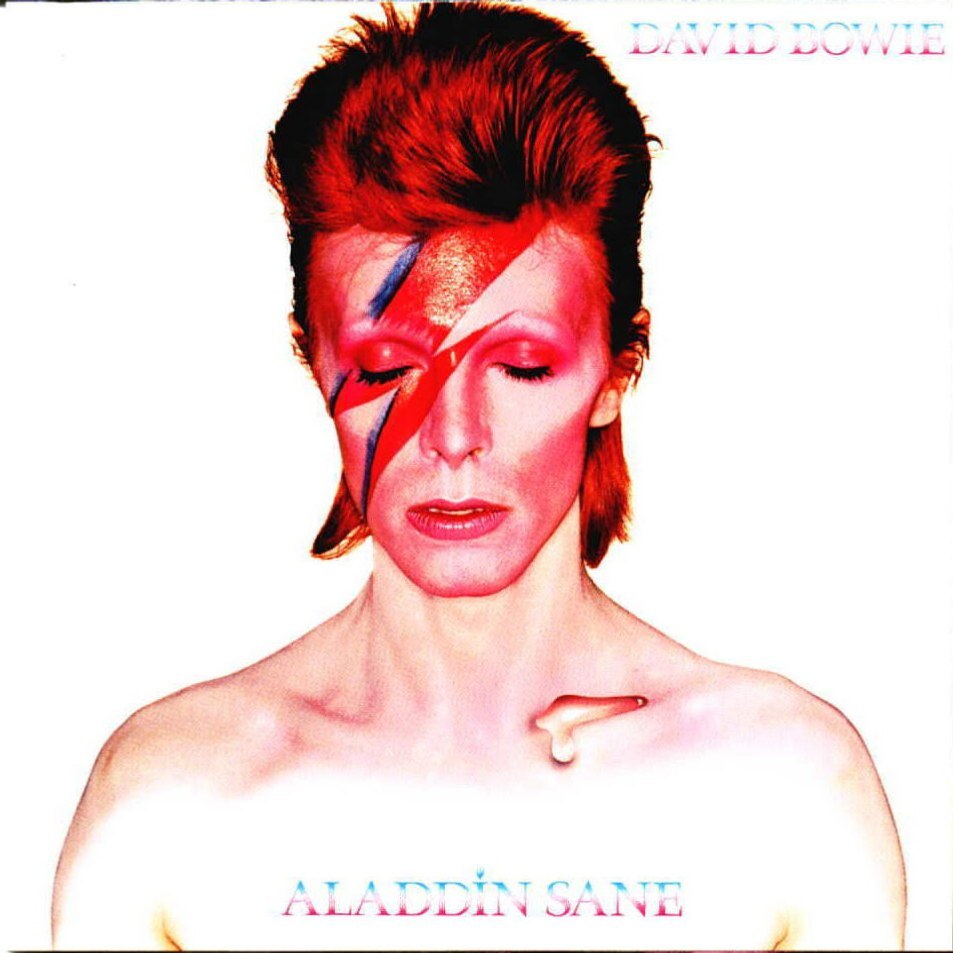
Happy Birthday Bowie!

This was going to be a post about my top electro 80s tracks to go running to, but a little thing intervened. And that little thing is DAVID BOWIE’S BIRTHDAY. It this were a weekday, it would be a National Holiday. Obviously. This is a supreme, glorious day. Bowie is 65 years old, wuzza wuzza. And his name……..is Jareth…….and he is the goblin king……

Not that I haven’t moved on from Bowie’s early work. No sirree. I started listening to Bowie around the time I was doing my AS Levels at school, and I think I should wholly attribute my success to Bowie and his good influence. Not really, it was all me. But your teen years are such a great time for discovering new music, because the music you hear and enjoy starts to become a part of your identity. You definite your parameters by what music, films and clothes you like. Everything you choose screams out some previously unexpressed facet of your nature. You revel in your new found self, certain that a piece of music has never, ever meant so much to anyone else.

I got into Bowie around the same time I got into Brecht and subsequently Cabaret. In other words, I was an absolutely insufferable, typical teenage Drama Student. And what? I think everyone should go through that phase. I still adore Bowie to this day, which is why I’m going to honour his birthday with my pick of his songs. I could, quite frankly, choose all of them. But I’ve tried to narrow it down, as he’s…well, you know. He’s done a lot.

1. Pallas Athena –  coming much later than the majority of my Bowie collection, I stumbled across this track by accident. I’d put it on a Spotify playlist but never heard it, and it suddenly came on when I was marching around the underground. I suddenly felt very dramatic and special. Special in so many, many ways. You’ve got to try it. How crazy is that sax?!


2. Alabama Song – You can imagine that, as a Brecht-loving drama stude, this was high up on my list. Discordant, often tuneless and fairly ‘ugly’ to listen to, I adored it. You’ll love this or hate it, but it’s undeniably bizarre and strangely cheerful, despite the occasionally gruesome lyrics.


3. Golden Years – Quite possibly my all time fave. In this video, he sounds a bit like Harold Steptoe as he introduces the song, but just ignore that and focus on the sublime sliding of his voice around the line ‘don’t let me hear you say life’s taking you nowhere, aaaangel’. Play this on road trips, at parties, when you need to do make a change in your life. I suspect that even when I’m 70, I’ll still be listening to him singing ‘the nights are warm and the days are youuuung’. An absolute must listen. Nothing’s going to touch you in these Golden Years.


4. Lady Stardust  – from the album ‘The Rise and Fall of Ziggy Stardust and the Spiders from Mars’ (phew!) and album of quiet starts and huge endings to the tracks. I could have chosen any song from this album, but the lyrics on Lady Stardust are what won it for me in the end. ‘Lady Stardust sang her songs of darkness and disgrace.’


5. Wild is the Wind – Almost alarmingly beautiful. I know it’s not his originally, but I would say Bowie’s version is my favourite. He puts the inimitable Bowie stamp all over it, so much so that it sounds as if he wrote it anyway. I was in a performance of Jesus Christ Superstar in 2010, and I couldn’t get over how much ‘Gethsemane’ reminded me of this song. You could pretty much sing one on top of the other. Anyway, enough of sullying Bowie with talk of ALW musicals.


Honourable mentions, but you all know/love them anyway, so no point picking them specially:

Rock’n’roll suicide for the slow build and the ‘oh no! You’re not alone!’ section.

Rebel Rebel because you just can’t beat it.

Modern Love walks beside me, walks on by, gets me to the chuuuuurch on time!

Life on Mars because it’s other worldly yet familiar at the same time.

Sound and Vision is another of my all time faves. Blue blue, electric blue, is the colour of my room, where I will live. You do that, David.

Five Years And it was cold and it rained so I felt like an actor, and I thought of Ma and I wanted to get back there’.

China Girl Because you know why.

Queen Bitch purely for the line about the ‘bibbidy bobbidy hat’.

The Only Way is Blogging

Just a quickie from me, to tell all you fellow bloggers out there about an event which I’m just a teeny weeny bit excited about.

Yes, it’s the fabulously named ‘The Only Way is Blogging’! (TOWIB) for short. I’ve been longing to go to one of their quarterly events after seeing it mentioned by one of my blogging heroes: llymlrs.com

If you haven’t heard of it, it’s essentially a celebration of blogging brought to you by blogger extraordinaire London Beauty Queen (www.londonbeautyqueen.com), including things like workshops, Q&A sessions, talks, and of course plenty of networking opportunities.

The Spring Social of 2012 will be held on Saturday February 11th from 12-6 (venue TBC), so why don’t you think about going along? I myself will be attending with marketing blogger and friend Nanna (nannakrebs.com). Details are still being shored up, but it should be a fantastic event if the previous ones are anything to go on. So come along, and let me know if you are! I’m quite excited about meeting people in….real life….

Oh, and costwise, the event has previously been free of charge, but I think the organisers are considering charging a mere £5 for all the bloggy goodness. This is extremely generous and reasonable, seeing as certain blogging events try and sting you for entry fees of closer to £100!

If you’re interested, check out the blog: http://www.towib.blogspot.com/

Of follow them on Twitter: @towib1

Or even on Facebook! http://www.facebook.com/events/188295171248339/

Enjoy! Don’t say I never give you anything!

Amelia xx