Black Mirror: The National Anthem, Part One

Black Mirror: The National Anthem

Well. Who watched it? By the looks of my Twitter and Facebook pages, not that many of you, actually – at least not many people I know. My timelines have been clogged with X Factor and Strictly all evening, but I only spotted a handful of references to this. I set my recorder, and that’s what I’m doing now, sitting down at 11.30pm watching it. In a manner Mr Brooker would be proud to lampoon, I decided to do a kind of post action ‘live’ blog. A contradiction in terms and utterly pointless, but I’m just going to go through and list some of my reactions as I watch it. So here goes.

About half an hour prior to watching: I’d read the synopsis, which said about a ‘beloved Princess’ being kidnapped, and the PM having to make a ‘difficult decision’. Turns out that was an understatement. I find out before watching what the particular ‘difficult decision’ will involve: the PM having sex with a pig on national TV. Oh, good. Fantastic. The chance of my dinner making a surprise guest reappearance becomes a very real possibility. But…I’m committed now. Let’s do this.

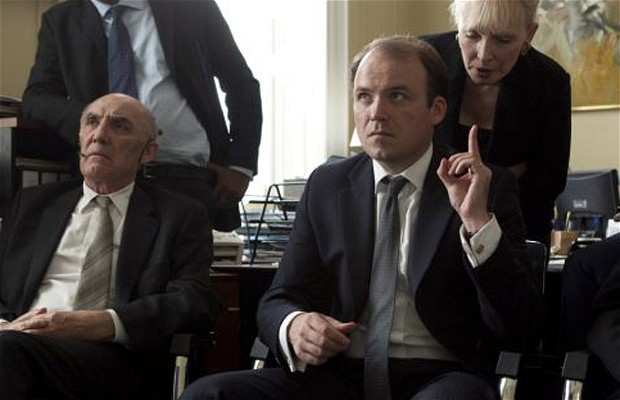
00.03 The actor playing the PM has obviously been cast to remind us gently but hideously of David Cameron, but the actress playing his wife is unbearably similar to SamCam. I’m already dying a bit inside.

00.04 Ok, here we go, the money shot – so to speak. We’ve got a bleary eyed Princess (not the Kate Middleton-alike I was expecting) having a nervous breakdown and doing a third rate Keira Knightley impression, pleading with the PM to save her life…..by having sex with a pig. On national TV.

It’s insane, and grotesque. And…I’m definitely reaching for the remote to turn off.  I’m not even doing that ‘car crash TV’ thing I so often do with X Factor. I can actually barely hear what the actress is saying, so I’m quite glad I found out in advance what the demands were. Because I’d probably have spent the next half hour going ‘I must be really perverted, because I’m convinced they’re implying he’s got to have sex with a pig’. Anyway.

What stops me clicking off is a little touch of humour. The PM’s advisors are standing solemnly around him, drenched in blue light. The PM furrows his brow: ‘they want me to have sex with a pig?’ The reply comes: ‘Live, on television, this afternoon’. I can’t help it, I giggle. Ok. Come on stomach, you and me can do this thing.

00.09 Brilliant: ‘This video came from Youtube’. We all know how fast a video can travel in 9 minutes on Youtube. Obviously, the genius thing about this is the fact that Brooker’s setting this in the way it would happen. The abject horror of the PM followed by smacking into the practicalities of it.

00.13 We’re back after the ad break – a blonde girl is lying on a bed with her boyfriend, telling him that ‘Princess Suzanne has been kidnapped’. And this is it, this is where I’m now hooked, because obviously this would be most of us. Alarmed, convinced it’s a ‘piss take’, then bemused as to why it’s not on the news but has spread across all forms of social media. I actually remember this with the riots – sitting up late at night, checking Twitter as parts of London were burning to the ground, and yet the news was frozen, stuck in a place that the social networks had long since moved on from. I remember finding it curious that I stopped relying on the official news channels to tell me what was happening! That I was relying on my friends and acquaintances instead.

00.14 We’re in a newsroom, a team discussing whether they can run the story, and if so, how. The issue is raised as to why Facebook is providing solid coverage, but not the official news. They’re running it.

I like the fact that Brooker got the pig sex thing out of the way in first minute (I assume – still convinced I couldn’t hear a word that actress was saying). It means we’ve sort of put that to one side of our brains, it’s still there, but we’re able to focus on everything else: how the story’s being covered, what the advisors are doing etc…

I hate crude dialogue in most things. I think it shows a lack of imagination. But as an advisor tells someone over the phone to ‘shove it up your arse’, it actually has the effect of jarring me right back into the horror of the imagined act. Because what’s happening is, I’m trying not to think about it, but having to think about it at the same time.

00.16 We’ve got a special effects advisor – of course – I didn’t even think of this. I’ve been seeing this whole story as a pornographic extension of the Grimm’s Fairytales I read as a child – and there was some pretty bloody weird stuff in there, let me tell you.

00.17 Blondie and colleagues are watching the news as it breaks at work. There’s a brilliant little montage showing people absorbed but ultimately involved in their own lives. This is so perfect, and entirely what happens in extreme situations. The world is always watching, but never fully stops and stares.

00.18 The woman from the news crew is sending photos of parts of her body in exchange for insider info on the case. A nice touch again – a metaphor about how we have our own trades, our own demands, our own ransoms. Or maybe it isn’t that at all. I’m getting a bit tired and also dizzy from writing so fast.

00.18 Ace little dig at The Guardian and a) their love of live blogging, and b) the way they’d run this story: ‘the cultural significance of a pig’. Ha. God, I love The Guardian. Never change.

00.19 Vox pops of people in the street on the news ‘it’s disgusting’, ‘revolting’. I like the way that Brooker is building up this idea of people themselves being utterly revolting,  and we as the viewers are too. Because deep down, do we want this to happen? Why are we still watching? Why am I still sitting here, watching a TV programme where there’s a chance an actor might be pretending to have sex with a pig within the hour.

00.21 Sam Cam clone is talking to her husband. I tuned out a bit.

‘Would they use a female pig?’ Blondie asks, and then there’s a discussion about Lars Von Trier. I like this, again – it’s showing how the initial disgust has been filtered down: how, no matter how ‘connected’ we all are, all the time, we are ultimately disconnected, emotionally. What a load of wank. It made sense when I wrote it. Maybe The Guardian will give me a job?

00.23 Techie girl has managed to trace a possible lead, using a lot of technological speak that I miraculously followed. The aerial shot of the campus looks a lot like my uni.

Break time! Finger stretch time….

Read part two here: https://ameliaflorencesimmons.wordpress.com/2011/12/05/the-national-anthem-part-two/

How We Made Our Millions

It was with a new interest that I spotted ‘Peter Jones: How We Made Our Millions’ on the TV schedule last night. Usually, this would be the kind of programme I wouldn’t touch with the proverbial barge pole, but since I’ve been starting to set the tiniest of all small businesses – my jewellery company – I’m suddenly an avid viewer of all this business malarkey. ‘The Apprentice’ and ‘Dragons Den’ now get my undivided attention (rare – I’m usually drawing or texting or daydreaming when I watch TV). The continuity announcer intoned something about lingerie and smoothies, which led me to the conclusion that this was either a program about odd but harmless fetishes, or it was going to be that ‘woman with the terrible hair extensions’ who founded Ultimo (Michelle Mone), and ‘that chap from Innocent’ (Richard Reed). I was bang on the money, so to speak. Especially about the terrible hair extensions.

I watched the first ten minutes in delight. I knew from their amusing bottles that Innocent weren’t going to be the standard company, and I was overjoyed to see something that appealed entirely to me, with my crushing fear of authority and dislike of conventional working environments. Everything about Innocent sent me into paroxysms of happiness: the spinning wheel used to help them make decisions on smoothie flavours, their homely communal areas, their t shirts and beards and smiles. Peter Jones commented frequently on how out of place he felt, and seemed faintly appalled at the working environment. A particular focus of his ire was a sort of woven basket chair that hung by Richard Reed’s desk, designed to make it easy for employees to talk to each other.

Fruit Towers

I know I’ll be biased here, because Innocent is exactly the kind of company I’d love to work for one day, or I’d at least like to adopt some of Reed’s Messiah-like charisma and management style. But Jones seemed to have decided prior to filming exactly what his angle was going to be, and he was determined to lead the programme with that in mind, instead of being open to possibilities. It seemed he’d gone for this:

Innocent and Ultimo, two ostensibly similar companies in terms of success, including a brush with bankruptcy for both, and with each represented by a figurehead who will be the main subject of the documentary. The similarities end here: Reed, a Cambridge graduate, has formed a company based on ‘hippie’ values. Why, then, did they ‘sell out’ and allow Coca Cola to buy a portion of the company? Can they really all turf up in t shirts and give huge amounts of money to charity? Mone, conversely, came from incredibly humble beginnings, has worked hard for her success, and as Scotland’s first billionaire, is an exceptionally influential businesswoman. Does that mean she doesn’t suffer any insecurities?

And that was how he was determined to keep it. I found this to be unbelievably reductive, and blinkered him from pursuing the interesting insights thrown up as he talked to his subjects. I’ll expand: despite graduating from Cambridge, Reed was in no way the ‘privileged posho’ Jones seemed to want him to be. They included a brief section where Reed explained how he’d grown up in Huddersfield, that his parents had worked hard to educate him, and that he’d exited a stint in a dog biscuit factory as the ‘brush’ to start a lawn mowing company at the age of 15. Part of the programme was to take the entrepreneurs back to a place which had formed a seminal part of their upbringing. Jones elected to take Mone back to her tiny house and run down school, and yet took Reed to Cambridge, overlooking the opportunity to swipe him back to the dog biscuit factory that formed an important part of his business life.

The programme progressed. Away we went to Scotland, and to Ultimo HQ. Michelle Mone, all tight jeans, peroxide and unsuitable eye make up, introduced Jones to the building, explaining how it was shaped like a breast. This did nothing to assuage my feeling that Mone  veered very much to the ‘tacky’ side of the taste spectrum. Like I said, I’m writing this as a middle class, privately educated, largely pretentious 23 year old. I’m enthusiastic about new management styles passed down from innovative American companies like Google. I have ridiculously strong aesthetic beliefs. I apologise for not being able to look at this objectively, and pulling Jones up for exactly the same. I actually admired Michelle Mone on her recent stint on Sleb Masterchef, and genuinely liked the woman – this show changed my opinion irrevocably.

Mone took Jones up to meet her staff, who were entirely mute, just nodding when asked questions. The desks were freakishly tidy. Her PA looked tired and put upon but still enthusiastic. She waved Jones into her ginormous office (Reed had none, instead working in a corner of the open plan office, to encourage ease of communication with other staff). She showed off the wallpaper made of her press clippings. She explained she’d all but die for her company. Fine – you can’t argue with her dedication, only her taste. Excuse me for a brief foray into vacuity, but I simply cannot understand how a woman worth that much appears to have purchased the cheapest hair extensions known to man. I can’t stop looking at the ratty things.

Michelle Mone

Anyway. Breathe. On the programme went, showing Reed with schoolchildren, tossing fruit into a sheet, on the beach with his friends looking serene, eating on a picnic bench with the serfs in the middle of the canteen. Mone was pictured lounging on a…well, a lounger, cocktail in hand, in some glamorous destination. Jones took Mone to a restaurant and pressed her to talk about the death of her brother when she was young, and revisited the house she grew up in, where her neighbour had kept all her clippings (save yourself the effort, love – Michelle could provide you with some lovely wallpaper of the same thing).

As we reached the vital last quarter of an hour, Mone was shown getting emotional, while Jones started a line of questioning with Reed that I found to be the least palatable thing in the whole programme. Jones kept trying to make him admit he was ‘in it for the money’. I’m not sure I’ll be able to form cohesive sentences here, but what on earth was the point in asking that? Firstly, Jones seemed to be imply that the company was selling out by making money, and yet Reed explained that they gave huge portions of it away, had started plenty of charitable initiatives, as well as events like ‘Fruitstock’ which they mounted to ‘reward their customers’. Reed never claimed not to be a good businessman, and I can’t see how them turning a profit makes him a bad person?! It was a limp line of questioning, with Jones attempting to catch him out.

Richard Reed

Jones summed up by saying something along the lines of how he was ‘relieved’ to have made Reed admit he was ‘in it for the money’. He then said what a fantastic time he’d had with Mone, and how she was a real and vulnerable person underneath the tough business exterior, etc etc. Not a word was said about Mone’s charitable initiatives, if there were any. I’d have really liked to see this programme done differently  – examining the similarities between the companies, or Jones taking the same tough line of questioning with Mone as he did with Reed. After all, if he was going to push Reed about the financial viability of his company, couldn’t he have questioned Mone on her altruistic side, if such a side existed?

Ultimately, it was a frustrating thing to watch. Questioning Mone’s PA in front of her and national TV cameras was hardly going to yield the truth about working there. All I can say is, I know which one I’d rather be working for. And in case you’re still in the dark, it wouldn’t be the breast shaped building.

A short history of bioelectricity

No, really. And yes, I am absolutely posting this after my blog on Liz Hurley, because that’s just how I roll.

Last night, I was lucky enough to catch the magnificent Jim Al-Khalili on BBC Four, in Part One his programme ‘Shock and Awe: The Story of Electricity’. When I saw the title, I yawned into my sleeve. ‘Boring!’ I sighed to myself, and reached for the remote for something a bit sillier. The traumatic flashbacks to Physics lessons had begun to kick in, I’d had a long day, and I just wanted to shut my brain down.

Oh, but hang on a minute.

A darkened cellar? Candlelight? Dramatic, swooping music? The awed, yet still reassuring tones of Professor Jim? I stopped, remote still lodged in hand. A quick shot of Prof Al-Khalili clad entirely in chain mail, and the promise of a leap back to the 18th Century, and I was totally sold. The remote was shoved firmly to the side, and I turned on, tuned in, and had my mind blown.

All that said, this is not a review of the TV show. I’ll just say, watch it yourself, because it is spectacular. I’m going to talk, instead, about what grabbed me most: the works of Luigi Galvani and his nephew, Giovanni Aldini.

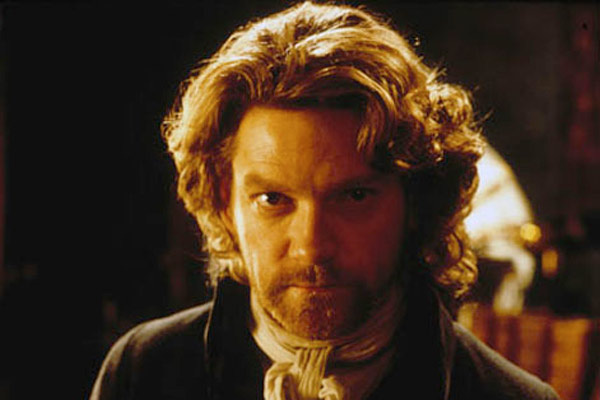
In the first year of my English Degree (come on, it’s got to be useful for SOMETHING), I developed an utter fascination with Frankenstein, to the extent that I even made my poor boyfriend of the time watch Kenneth Branagh’s epic production, which lasted at least three weeks, and cast ol’ Kenny in the role of a misunderstood but still maverick genius, Victor Frankenstein. That man has a serious hero complex – I dread the day that he decides to play Hitler, as it’ll be all floppy fringe, chinless heroism and grand gestures.

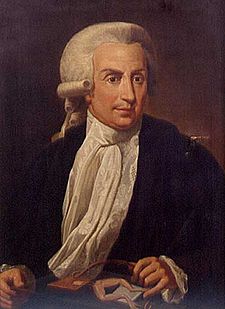
Where was I? Yes, literature. Anyway, I’d obviously heard the term ‘galvanism’ bandied around a lot, and being the conscientious student like wot I was, I never actually bothered to look it up. Nope, not even on Wikipedia. Well, thanks again, Jim Al-Khalili (sorry, I just like typing that. Say it out loud, it’s rather fun.) Where Volta was more pragmatic, eventually creating an early battery, Galvani thought electricity to be linked with biology, thinking instead that electrical impulses came from the movements of the muscle. I’ll skim over the part about him wanting to create a 12 foot ‘super frog’ by making various frogs eat each other, and go straight to the less insane stuff.

Galvani

Galvani conducted experiments on the legs of dead frogs, thinking intrinsic electricity in the frog was causing a charge, making the leg move. Volta and Galvani went head to head, each thinking the other completely wrong. Here’s where I got really interested. Because as anyone who has read Frankenstein will know, Victor’s early experiments and scientific findings follow much the same route. I find the ‘birth’ of the monster utterly chilling, no matter how many times I read it, or how many awful adaptations I see (not you, National Theatre/Benedict Cumberbatch, you were ace.)

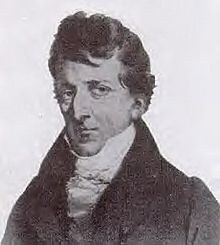
So, Aldini, nephew to Galvani, had edited his theories on animal electricity, and took the research further. Instead of little frogs, he conducted experiments in public on the body of a dead criminal, freshly cut down from the gallows. He applied electrical currents to the dead body, which made the body sit upright and twist around, making the body seem alive. You may remember that at Ingolstadt, Victor explores much of the same. Mary Shelley read the writings of Aldini prior to writing Frankenstein, and I find it all the more frightful for that.  I’m disgusted in myself for not knowing about these genuine experiments that formed a framework to the book.

Aldini

Anyway, a bit of a change of pace, but I really cannot recommend the programme enough. I’ll certainly be picking up Frankenstein again, and reading more about galvanism and the terrifying figure of Aldini.

A nice picture of Kenny B

Watch Shock and Awe: The Story of Electricity, here: http://www.bbc.co.uk/iplayer/episode/p00kjq6h/Shock_and_Awe_The_Story_of_Electricity_Spark/

(Pictures courtesy of the one, the only, Google Images)